
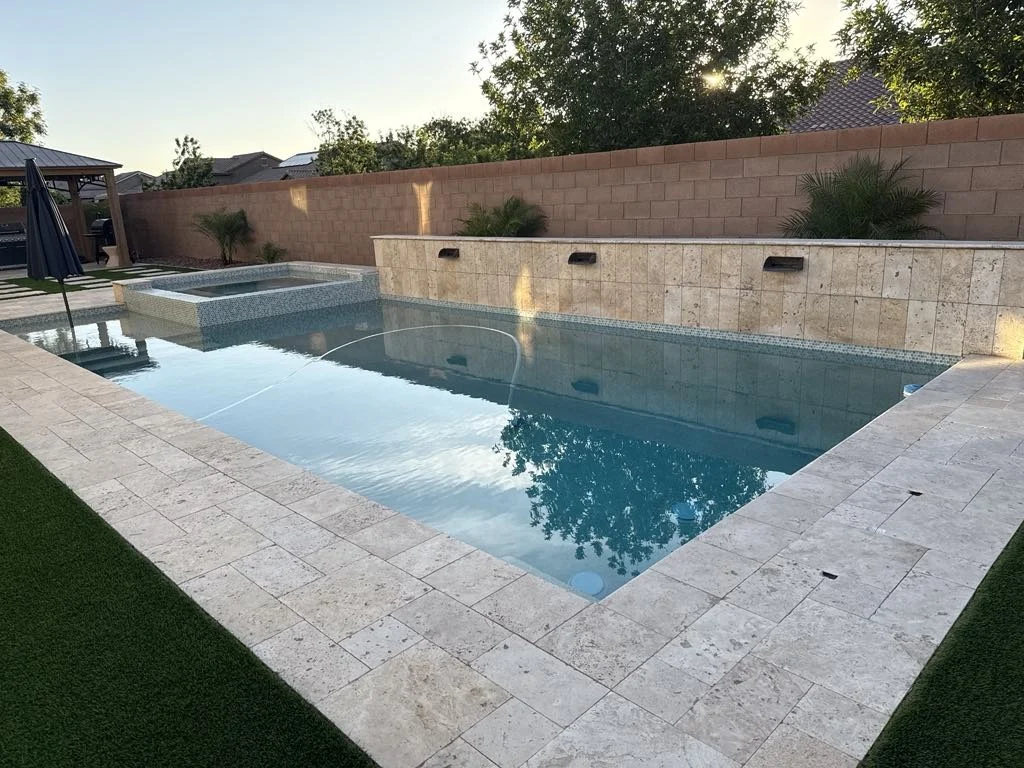
As the warm days fade and cooler weather sets in, it’s important to properly winterize your swimming pool to protect it during the off-season. Whether you live in a colder part of Arizona or simply want to minimize maintenance through the winter months, closing your pool the right way can prevent costly damage and make reopening a breeze come spring. Here’s a step-by-step guide to help you winterize your home swimming pool the right way.
1. Clean and Balance the Water
Start by thoroughly cleaning your pool. Remove leaves, dirt, and debris using a skimmer net and vacuum. Brush the walls and floor to loosen any algae or residue. Once clean, test your water and adjust the pH, alkalinity, and calcium hardness to recommended levels. Properly balanced water helps protect your pool’s surface and equipment from corrosion or scaling during the months it’s not in use.
Recommended levels:
-
pH: 7.2–7.6
-
Total Alkalinity: 80–120 ppm
-
Calcium Hardness: 200–400 ppm
2. Shock and Add Winterizing Chemicals
Before closing your pool, shock it with a chlorine or non-chlorine shock to kill any lingering bacteria or algae. Then, add winterizing chemicals, including an algaecide and a stain & scale prevention treatment. These will help keep the water clean and protect surfaces during the off-season.
3. Lower the Water Level
Depending on your pool type and whether you use a solid or mesh cover, you may need to lower the water level slightly. For most pools, the water should sit just below the skimmer mouth. This prevents freezing water from damaging the skimmer or tile line.
4. Drain Pool Equipment
Water left inside your pump, filter, heater, or pipes can freeze and cause serious damage. Disconnect the pool equipment and drain any remaining water. Blow out the lines using a shop vac or air compressor if you’re in a freeze-prone area, then plug the return lines with winter plugs. Remove and store accessories like ladders, handrails, and pool cleaners.
5. Cover the Pool
Once your pool is clean, balanced, and your equipment is drained, install a quality winter cover. A properly fitted cover keeps debris out, blocks sunlight to minimize algae growth, and prevents accidents. Be sure to secure the cover tightly and use water bags or safety clips as needed.
6. Monitor Periodically
Even after winterizing, it’s a good idea to check your pool every few weeks. Make sure the cover is secure, remove excess water or debris, and inspect for signs of algae or damage. A little attention during the winter goes a long way toward an easier opening in spring.
Final Thoughts
Winterizing your pool may seem like a chore, but it’s an essential part of protecting your investment. Taking the time to do it right ensures your pool stays in great shape during the off-season and saves you time and money when it’s time to dive back in. If you’d rather leave it to the pros, AZ Family Pools offers reliable winterization and seasonal maintenance services — so you can enjoy peace of mind all year long.